
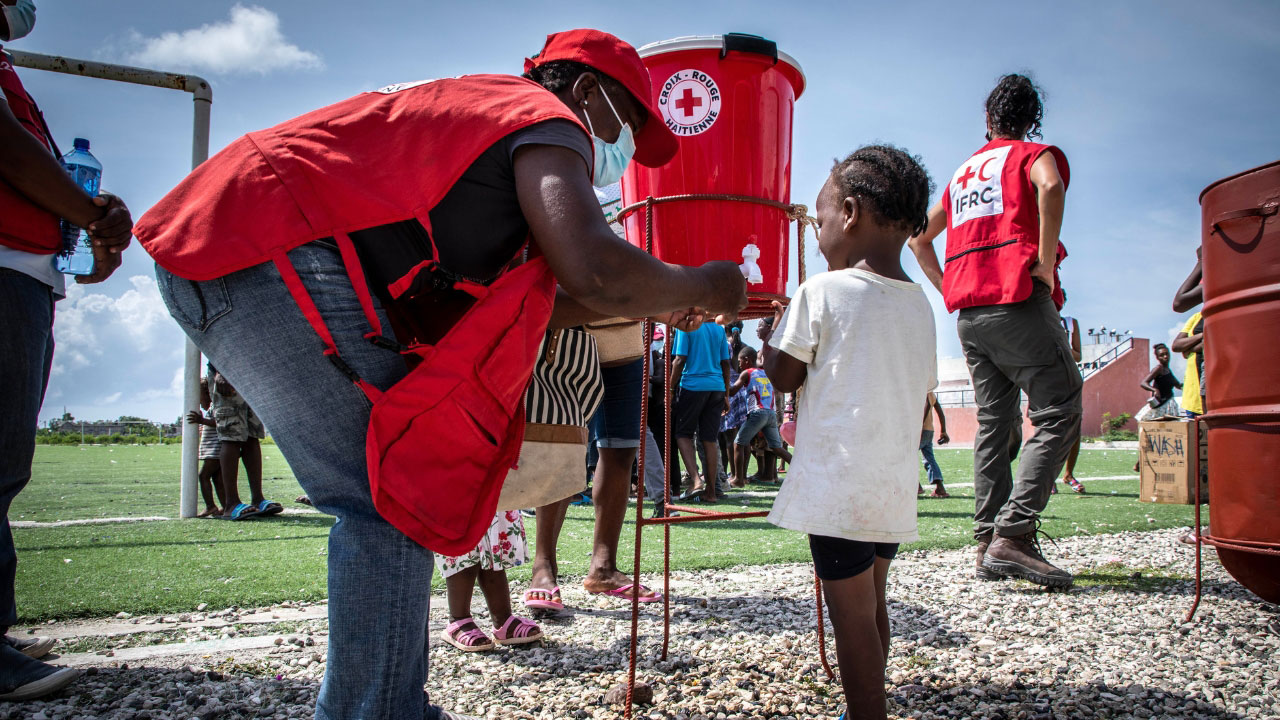
Disaster Response Emergency Fund (IFRC-DREF)
The main objective of the session was to present the reforms and innovations implemented in the Disaster Response Emergency Fund (IFRC-DREF). These changes aim to streamline access to financial resources in a swift and timely manner during the phases leading up to and following a disaster, thereby strengthening the preparedness pillar and the immediate humanitarian response of National Societies.
The first of the modalities explained here is Imminent IFRC-DREF, a mechanism within the preparedness pillar designed for rapidly evolving crises with highly reliable forecasts. This fund allows National Societies to request up to 75,000 CHF in a period ranging from one month to three days before the anticipated event, with a response time from the Secretariat of no more than 24 hours to approve the allocation. Operations under this scheme have a maximum duration of 45 days and are governed by a “no-regrets approach,” meaning that if the disaster’s impact ultimately does not materialize, the National Society is not required to reimburse the funds used for preparedness actions.
The practical utility of the Imminent IFRC-DREF was demonstrated during the session through the experience shared by the Jamaican Red Cross during the threat posed by Hurricane Melissa. As this was an unprecedented Category 5 hurricane for the island, the National Society received funding approval in less than 36 hours and three days before the expected impact, thanks to early monitoring in collaboration with regional and cluster offices. This foresight allowed them to mobilize volunteers and directly pre-position non-food items in areas with pre-existing structural vulnerabilities. In this way, they distributed tarps, flashlights, and hygiene kits before the storm made landfall, enabling rapid action that significantly reduced the suffering of communities. As a key lesson, the National Society emphasized the importance of familiarizing oneself with the tool during calm periods and structuring draft requests based on demographic data and historical vulnerability maps, thereby avoiding the loss of valuable time in the midst of an emergency.
The second tool discussed in the session is the Emergency Advance Payment, which is activated immediately after a sudden disaster occurs as a process parallel to the formulation of the regular DREF. Its major advantage lies in the fact that it is managed directly with the local IFRC delegation without requiring approval from global teams, enabling the transfer of funds in less than 24 hours. The amounts are standardized according to the severity of the event, with 30,000 CHF allocated for yellow-category crises and 100,000 CHF for orange or red categories. This mechanism institutionally commits the National Society to launching an IFRC-DREF or a subsequent Emergency Appeal; otherwise, the advance must be repaid.
The Venezuelan Red Cross provided valuable lessons on the strategic use of the Emergency Advance Payment during a recent water crisis caused by extreme drought; the Fund’s agility allowed for the mobilization and installation of water treatment plants on the ground in less than 72 hours. This timely response capacity not only mitigates a critical crisis but also empowers the National Society with strong leadership and ownership when coordinating actions with communities and local authorities, backing its institutional stance with real financial resources available on the spot.
In addition, the National Society recommended not activating this tool automatically but strategically, and highlighted the need for a pre-established supplier database that complies with IFRC administrative standards to enable immediate invoicing and expenditure.
Finally, the Fast-Track Approval (Fast-Track 25%) was presented, which is the default mechanism for response operations when neither of the two previous options has been used. Under this format, the Secretariat issues an initial approval of eligibility and compliance within 24 hours of receiving the request, immediately releasing 25% of the total budget required to ensure liquidity while the technical review of the full project is completed.
The session concluded with a reminder that all formal applications for IFRC-DREF funds must be submitted digitally through the IFRC’s GO platform. The recent launch of the new IFRC-DREF Guidelines was also highlighted, a key document designed to deepen understanding of these early-stage funding tools.
Cross-country Cooperation for Response
Disaster risk management across the Caribbean, Central America, and the Andean region shares a fundamental and inescapable premise: no single country possesses the financial, logistical, or operational capacity to handle major catastrophes entirely on its own. Under this reality, the Caribbean Disaster Emergency Management Agency (CDEMA), the Center for Coordination of Natural Disaster Prevention in Central America and the Dominican Republic (CEPREDENAC), and the Andean Committee for Disaster Prevention and Relief (CAPRADE) fully agree that the effectiveness of international aid cannot be improvised during a disaster; rather, it relies strictly on legally binding agreements and institutional trust built prior to a crisis. Furthermore, there is absolute consensus on the urgent need to pivot from a purely reactive response model to localized risk reduction and the implementation of forecast-based anticipatory actions. This paradigm shift aims not only to save lives but also to mitigate the devastating economic toll on nations. Additionally, all three regions identify real-time data sharing and uneven national technical capabilities as critical, ongoing challenges that require continuous training to counter high government turnover.
Despite these shared objectives, the unique geographical and historical backgrounds of each organization define distinct individual approaches and operational tools:
CDEMA’s strategy is highly shaped by its island geography and the extreme fragmentation of its 20 Participating States (mostly SIDS). Given a strict reliance on maritime and air transport, its backbone is the Regional Response Mechanism (RRM), a decentralized framework driven by four subregional focal points (such as Barbados and Trinidad and Tobago). Recent experiences with Hurricanes Beryl and Melissa (2024-2025) validated a progressive activation model that respects the affected state’s leadership, while introducing specialized technical working groups for logistics, shelter, and data management for the first time. It also stands out for its focus on social inclusion, training local committees in sign language (as seen in Jamaica) to safeguard vulnerable populations.
CEPREDENAC is a specialized branch of Central American Integration Systema (SICA), it focuses on political and strategic support guided by the Central American Policy for Integral Disaster Risk Management (PCGIR). Its signature tool is the Regional Humanitarian Assistance Mechanism (MECREG), a presidential mandate that simplifies and unifies customs, immigration, and quarantine procedures to fast-track international aid. Operationally, it fosters unprecedented multisectoral dialogues—such as meetings between ministries of finance and National Red Cross Societies—and validates its protocols through targeted regional simulations, such as the recent Central American Wash Hub water and sanitation exercise involving the coordinated participation of Honduras, El Salvador, and Guatemala alongside the Red Cross National Societies of those countries. This exercise successfully tested the cross-border mobilization of specialized equipment and raised operational standards for multi-country disaster scenarios.
CAPRADE committee was explicitly created as an institutional response to the devastating economic impact of the 1997–1998 El Niño phenomenon, which cost the region over 7.5 billion dollars. Rather than acting as an independent enforcement body, it functions as a technical-political integration mechanism that connects national secretariats under the Andean Strategy for Disaster Risk Management. Its primary tool is the Humanitarian Assistance Coordination Guide, and it has successfully evolved into a practical platform capable of addressing diverse, complex environmental crises. A clear example of this practical utility was the coordinated response to a major oil spill originating in Ecuador, which began spreading into neighboring waters. CAPRADE’s platform successfully triggered mutual contingency protocols, proving that pre-established institutional trust is vital to managing complex, transboundary environmental emergencies.
Population Movement and Regional Response
This session highlighted that disaster-related displacement is no longer an exceptional phenomenon in the region. In 2024, the Americas recorded more than 13 million displacements, the vast majority linked to hurricanes such as Helene and Milton. Over the past decade, the trend shows a sustained 13% increase, and episodes of repeated and prolonged displacement — where the same highly vulnerable communities are forced to move more than once a year — have become a troubling pattern. Compounding this picture are factors that deepen exposure: urban informality, transit migration, language barriers, misinformation, and the overlap, in some territories, between disaster impacts and situations of violence.
In terms of public policy, the region has made significant progress. The Inter-American Commission on Human Rights and the Inter-American Court have issued resolutions guiding countries on rights protection in displacement contexts. Countries such as Guatemala, Costa Rica, Chile, Mexico and Peru have integrated human mobility into their climate commitments and adaptation plans. Colombia, for its part, passed a law — pending presidential signature — that recognizes internal displacement caused by environmental, climatic and disaster factors, and provides for the creation of a dedicated registry. In Panama, a protocol on planned relocations is currently open for public consultation. The Costa Rican Red Cross, from an operational standpoint, has developed anticipatory action initiatives for floods with a focus on livelihoods, and promotes community-led shelter management through the “Comunidades Alertas” program.
Yet the gap between policy and reality persists. Registration systems remain insufficient: most counts capture only people in official shelters, leaving invisible those who take refuge with family members or neighbors. Contingency plans rarely incorporate specific displacement scenarios. And the differentiated needs of women, girls and boys, older adults, people with disabilities and indigenous communities do not always translate into concrete protocols. Misinformation, panelists noted, also directly obstructs evacuation processes: some people refuse to evacuate for fear of losing their belongings, while migrants avoid accessing assistance for fear of deportation.
The session’s recommendations pointed in four directions: integrating displacement scenarios into contingency and anticipatory action plans before each season begins; strengthening data systems to monitor not only the number of displaced people but also the duration of displacement and conditions for return; advancing toward durable solutions for those who cannot return to their places of origin; and ensuring that the region’s extensive body of existing policy and legislation is implemented and evaluated in concrete terms, with indicators that allow its real impact on communities to be measured.
Artificial Intelligence and Digital Tools in Preparedness: Usefulness and Ethics
The session focused on analyzing practical AI-driven preparedness solutions in humanitarian contexts and the ethical challenges associated with adopting these technologies. Key ethical concerns mentioned included data privacy and confidentiality, the risk of discriminatory bias based on the source of the information, and the importance of not delegating final decision-making to these models. The absolute necessity of always keeping a human in the process to review each result before applying it was also emphasized.
The Lebanese Red Cross presented its practical experience through the development of a web application designed to optimize the flow of emergency calls, called the Emergency Call Workflow Pipeline. This system uses four large language models (LLMs) adapted to process French, English, and different regional variants of Arabic. The tool allows for the full transcription of voice calls, structuring the conversation, and extracting analytical metadata to generate records of patients, medical conditions, and locations. The National Society chose to develop a local, open-source offline package hosted on its own servers, which reduces latency and API costs while ensuring that confidential data remains secure and encrypted for strictly humanitarian purposes.
For its part, the Dutch Red Cross, through its 510 initiative, presented the evolution of its Automated Damage Assessment (ADA) Tool, whose first experiments with drones date back to the response to Hurricane Irma in 2017. This technology addresses the critical need for first responders to identify affected people and assess the severity of the situation across vast areas, where manual assessment would take weeks or months. The ADA process involves collecting pre- and post-disaster satellite imagery, and AI models detect the shapes of structures on platforms such as OpenStreetMap to classify building damage on a scale of zero to four.
The system operates with an estimated accuracy of 80% and offers the advantage of being highly scalable by processing large volumes of data in parallel. Results are validated through human review of a sample of the classified structures, feeding new information into the model that is then translated into portable static maps.
The American Red Cross provided insights focused on internal management, the diversification of use cases, and the complementary relationship between technology and humanitarian staff. Their presentation emphasized that AI should never replace the compassion, dedication, and personal relationships built by their volunteers and donors.
Additionally, among its predictive tools based on historical data, the data science team uses geographic forecasting models to determine the availability of resources and volunteers in the event of potential disasters. Externally, chatbots are managed on its website to streamline access to information, and one of the organization’s current key areas of focus is Generative Engine Optimization (GEO), aimed at ensuring that its institutional content is optimized so that users consulting AI tools during disasters receive accurate information on what to do or where to go.
The session concluded by emphasizing that technology projects are successful only when they are co-designed with teams that understand the needs on the ground. Regarding the regulatory and institutional framework, it was announced that the IFRC is very close to launching the first version of its Artificial Intelligence Strategy, which is strictly grounded in the organization’s guiding principles.
Technologies Applied to Response
The session presented three thematic blocks connected by a common question: how do we ensure that the right information reaches the right people, in the right format, at the right time?
Tool 1: Risk Analysis Module — IFRC Go platform
The risk analysis module, accessible from the “Prepare” section of IFRC Go, integrates data from reliable external sources to provide disaster management teams with impact forecasts before an event occurs. The tool displays the type of event, date, location, estimated number of people exposed — disaggregated by age group when data is available — and the estimated value of buildings and schools at risk. For hurricanes, it visualizes the historical track, the projected path, and the cone of uncertainty. Its primary audience is the technical teams of National Societies, not communities directly.
Tool 2: IFRC Alert Hub — official alerts centre
The Alert Hub, accessible at ahp.ifrc.org, complements the previous module with a different focus: rather than impact projections, it provides official alerts sourced exclusively from national meteorological institutes and disaster management offices recognized by the World Meteorological Organization. The information includes concrete action instructions for communities — what to do, where to go, where to find more information. Its primary value lies in communication with National Society branches and communities, serving as a bridge between the official source and local action.
Tool 3: Satellite imagery — access and processes
The IFRC works to ensure that National Societies receive satellite imagery at the right time and in the right format during emergencies. Access is currently managed through requests submitted via IFRC offices, with delivery times of less than one hour once the request is approved. Looking ahead, the IFRC is developing a collaboration with the European Space Agency to systematize and expand access at a global scale, eliminating the need for individual requests during each emergency.
The Access Platform
Access is a registration and service delivery platform that inverts the traditional response model: rather than teams going out to find beneficiaries, people register themselves through a mobile application, in their own language and at any time. It includes a public app for self-registration, a programme management module for National Societies, and a version for staff and volunteers that enables in-person registration for those without a smartphone. During the response to Hurricane Melissa in Jamaica, the platform registered more than 4,000 families in under 24 hours through self-registration, reaching proportionally more families with higher numbers of vulnerability markers than in-person registration.
The One Platform
One is a platform for the end-to-end management of cash transfer programmes, from registration through to payment. It can be configured within a few working days, enables payments with a single click, and integrates with registration tools and local financial service providers. It was deployed for the first time in an emergency setting, remotely and in less than one week. Its expansion into the Americas is a priority for 2026.
Health and WASH in Emergencies: Integrated Response for Outbreak Control
Epidemiological outbreaks constitute recurrent and multifaceted threats (arboviral, diarrheal, and vaccine-preventable diseases) that present unique management challenges in the Americas region. Unlike sudden disasters such as storms or earthquakes, outbreaks are invisible, exponentially spreading threats that follow their own biological and social dynamics. The development, intensity, and evolution of the epidemiological curve are determined by the interaction between the pathogen, the environment, and the human host. Environmental factors such as climate change and rainy seasons interact with social vulnerabilities, misinformation, mistrust, and factors such as the alarming post-pandemic decline in vaccination coverage (falling below the critical 95% threshold). High-impact cases, such as hantavirus on cruise ships or Ebola in Africa, demonstrate the global nature of this risk. Public health emergencies are predictable and cyclical phenomena; studies confirm the mathematical increase in diarrheal diseases following tropical storms, as well as annual dengue surges in Central America or leptospirosis peaks in Jamaica and the Dominican Republic. In light of this, an effective response requires an integrated, multisectoral approach combining preventive medicine with Water, Sanitation, and Hygiene (WASH) interventions.
Arboviral diseases (Dengue, Chikungunya, Zika) are transmitted by day-biting mosquitoes with a short flight range (50–100 meters) that proliferate in clean, stagnant water. The critical clinical risk is severe dengue, which heavily impacts children. Public health action lines prioritize epidemiological surveillance, risk communication, repellent distribution, and strengthening primary care to identify warning signs. From a WASH perspective, work focuses on community-led larval control, leak repairs, and safe water storage.
In Suriname, faced with a widespread outbreak across all districts at the beginning of the year, an IFRC-DREF operation was deployed, starting in March and extending until August. Community mobilization has been prioritized through the use of social media, radio, and television, adapting technical messages into local languages to combat misinformation. Key lessons learned included the need to streamline supply procurement logistics, secure personal protective equipment for volunteers in high-transmission areas, and strengthen contingency plans for the pre-positioning of supplies ahead of future rainy seasons.
Diarrheal diseases are caused by viruses, bacteria, and parasites transmitted through the fecal-oral route (contaminated water, food, or hands). Their main complication is severe dehydration, which is lethal in children under five and older adults, particularly in contexts of malnutrition. Prevention requires safe water supply, proper excreta management, handwashing, and the promotion of oral rehydration solutions (ORS). Community surveillance is the central axis for identifying outbreaks that remain hidden due to the social normalization of the disease.
As a historic milestone in coordination, Honduras (assisting country), El Salvador (transit country), and Guatemala (assisted country) conducted a cross-border regional simulation deploying specialized equipment and technical personnel. The exercise successfully validated activation procedures, cross-border deployment of personnel and specialized water and sanitation equipment, and the operational integration of the Wash Hub within SICA’s Regional Response Mechanism, engaging customs, immigration, and ministries of foreign affairs in an unprecedented manner.
Vaccine-preventable diseases such as measles represent one of the most contagious threats due to airborne transmission through respiratory droplets; in unvaccinated communities, a single case can trigger exponential contagion chains (a 1-to-20 ratio). Since there is no specific antiviral treatment, immunization is the only effective response. Actions focus on identifying unvaccinated children, training healthcare personnel, providing logistical support to cold chains, and executing massive risk communication strategies on digital platforms due to the high demand for health content.
After decades without transmission (the last case recorded was in 1997, except for an isolated event in 2018), Guatemala was notified of an imported case on January 2, 2025. The outbreak escalated exponentially, reaching a total of 6,209 laboratory-confirmed cases, 7,752 probable cases by epidemiological link, and 12 deaths (9 of them infants under 1 year of age) by May 14, 2026. Strikingly, 62% of the affected individuals were concentrated in the 15-to-39 age group. The Guatemalan Red Cross contained the emergency by integrating actively into the Health Cluster and the national Emergency Operations Center (EOC), gaining the trust of the Ministry of Health. Through digital channels, they reached over two million users with simplified scientific information to combat the infodemic and collective anxiety. Major operational challenges included critical vaccine shortages in the national market, misaligned administrative timelines between the Ministry of Health and the National Society, and rigid procurement processes that slowed urgent purchases.